
MOC Requirements and Industry Standards
A strong Management of Change (MOC) process is essential for safe and compliant pipeline operations.
While PHMSA regulations require operators to follow procedures and manage risk, the industry standard for structuring an MOC process is defined in API RP 1173 – Pipeline Safety Management Systems, specifically Section 8: Management of Change.
API 1173 outlines that operators must:
These requirements set the expectation but executing them consistently is where most operators struggle.
The Problem with Managing MOC Procedures
Most operators already have a documented MOC procedure.
The issue isn’t the process, it’s how it’s managed.
Common breakdowns include:
These gaps create risk, slow down implementation, and make it difficult to demonstrate compliance when it matters most.
A Better Way to Manage the MOC Process
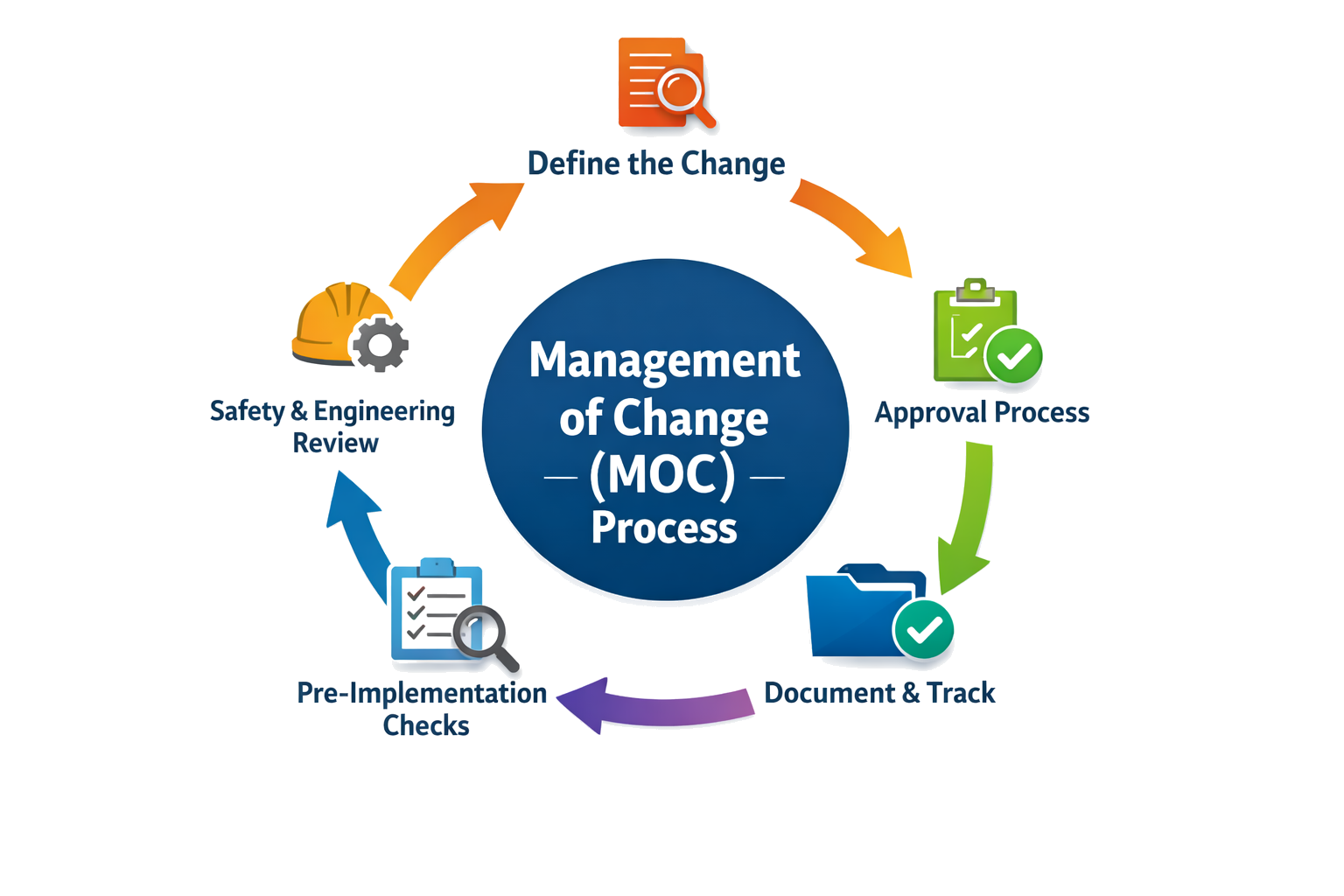
- 1Define the change
- 2Perform safety and engineering reviews
- 3Route for approvals
- 4Complete pre-implementation checks
- 5Document and track through completion
More importantly, the process must be:
Without these elements, even a well-written MOC procedure becomes difficult to maintain.
Enhance Your MOC Process with TaskOp
The TaskOp Management of Change (MOC) module was built to support API RP 1173-compliant workflows and eliminate the gaps that exist in manual processes.
TaskOp brings structure and visibility to your entire MOC process:
Instead of relying on disconnected tools, TaskOp helps you manage change the way your procedure—and industry standards—intend.
Strengthen Your MOC Process
If your current MOC process is difficult to track, inconsistent across teams, or stressful during audits, the issue is likely not the procedure, it’s the system behind it.
With the right structure in place, your MOC process becomes easier to manage, easier to verify, and more effective at reducing risk.
